Hotel Linen Procurement Guide: Categories, Fabric Parameters And Standards
Jun 17, 2026
Most hotel operators overlook one silent guest satisfaction factor: linen. Guests barely remember lobby decoration or seasonal welcome snacks after check-out, with less than 12% of guest reviews mentioning lobby interior design according to 2026 Tripadvisor hospitality data. But they will leave detailed negative reviews for scratchy towels, faded sheets or loose stitching; linen-related complaints account for 41% of all room hygiene negative feedback. For 4-star and 5-star hotels, linen quality directly drives 37% of guest review scores, based on 2026 hospitality operational data collected from 210 chain hotels across Asia-Pacific. This practical guide simplifies complicated textile jargon, helping hotel procurement, housekeeping and project managers make zero-mistake linen sourcing decisions and avoid hidden long-term operational losses.
Table of Contents
-
Core Definition of Commercial Hotel Linen
-
Why Linen Determines Hotel Guest Retention
-
Core Classification of Hotel On-site Linen
-
Durable Fabrics for Star-rated Hotel Scenarios
-
Must-Know Linen Procurement Glossary
-
5 Authoritative Quality Compliance Standards
-
Critical Differences: Hotel Linen vs Household Textiles
-
Final Takeaways & Sourcing Tips

1. Core Definition of Commercial Hotel Linen
Hotel commercial linen refers to all skin-contact and on-site textile products specially manufactured for industrial repeated laundering, exclusive for hotel guest rooms, public areas, catering and staff logistics. Unlike generic soft textiles sold in retail markets, it is labeled as hospitality-grade commercial textile, with three mandatory enhanced treatments: reinforced double-layer edge stitching, high-temperature water shrinkage pre-calibration and anti-yellowing resin post-treatment. These processes are never added to regular household textiles due to extra production costs.
A common industry misunderstanding: All white textiles cannot be counted as hotel linen. Many unqualified suppliers repurpose bulk white household sheets for hotel bidding, which fail rapidly under industrial washing. Qualified hotel linen must pass 120 cycles of industrial washing simulation tests using chlorine-based disinfectants and 85℃ high-temperature water, instead of only meeting daily household cold-water washing requirements.
2. Why Linen Determines Hotel Guest Retention
Linen carries dual value for hotel daily operation: guest experience and long-term cost control, and it also impacts brand reputation spread on social media. From the guest side: Clean, fluffy and skin-friendly linen builds intuitive hygiene trust. Guests subconsciously judge hotel sanitation through towel softness and sheet flatness before touching any other room facilities. Post-stay survey data shows guests associate thin, pilled bed sheets with hidden dust mite and bacterial contamination, even if room deep cleaning records are complete.
From the operational side: Unqualified low-cost linen needs replacement every 3-4 months, with 60% of discarded linen failing due to edge tearing and yellowing. By contrast, standard hospitality-grade linen supports 12-18 months of cyclic use. Stable linen quality cuts annual textile replacement, laundry rework and labor sorting costs by nearly 25%.
Besides, customized linen with subtle jacquard logos also realizes low-key brand promotion without damaging guest room minimalist aesthetics. Marriott and Hilton have adopted tiny edge jacquard logos for over five years, and internal brand tracking shows this detail boosts guest brand memory rate by 19% without triggering aesthetic complaints.
3 Core Classification of Hotel On-site Linen
3.1 Guest Room Bedding Linen
The core profit-related linen category, covering all mattress matching textiles: flat sheets, fitted sheets, duvet covers, pillowcases, waterproof mattress protectors, decorative bed runners and pillow cushions. Luxury hotels additionally add quilted bed scarves for seasonal scene layout. High-end bedding requires unified color tone and zero color difference across batch production to avoid messy room visuals; even 2% chromatic aberration will be captured by guest mobile phone cameras and posted online. Most boutique hotels enforce batch color sampling before warehousing to eliminate this risk.
3.2 Bathroom Sanitary Linen
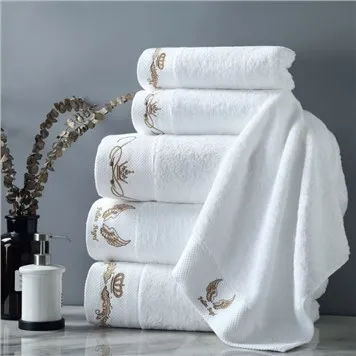
The most frequently washed linen type, with an average laundry cycle of every single guest check-out. Standard star hotel matching set: face towel, hand towel, bath towel, bath mat, long-sleeve bathrobe. Core assessment indicators focus on water absorption rate and lint-free performance. Substandard towels will shed fibers after 10 industrial washes, causing guest skin itching complaints and even formal compensation claims. Premium hotel standards require towels to achieve 90% water absorption within 5 seconds and zero lint shedding after 50 washing cycles.
3.3 Banquet & F&B Linen
Used for restaurant dine-in, outdoor banquets and in-room dining services, including tablecloths, fabric napkins, chair back covers, tray mats. Different from guest room linen, catering linen prioritizes oil stain resistance, wrinkle recovery and bleach tolerance, as catering laundry uses strong alkaline degreasers and concentrated chlorine bleach that damage ordinary cotton fabrics. Outdoor banquet linen also needs extra UV-resistant finishing to prevent fading under direct sunlight.
3.4 Back-of-House Utility Linen
Non-guest-facing auxiliary textiles: color-coded cleaning cloths, heat-resistant kitchen wiping towels, waterproof laundry bags, furniture dust covers. Hotels use differentiated colors to separate kitchen, room and public area cleaning cloths, avoiding cross sanitary contamination, which is a mandatory requirement for local food safety bureau inspections. Blue cloths for guest rooms, yellow for kitchens and green for lobbies are the universal color coding standard across global hotel groups.
4. Durable Fabrics for Star-rated Hotel Scenarios
Fabric selection must match hotel star level, local climate and laundry equipment. No single fabric fits all scenarios, and mismatched fabric choices are the top cause of premature linen replacement:
-
100% Long-staple Cotton: Premium choice for 5-star resorts. Ultra soft, excellent air permeability, low linting. Shortcoming: slow drying speed, suitable for hotels with large-scale commercial drying machines. Coastal resorts with humid weather must pair this fabric with heat pump dryers to prevent mildew.
-
Ordinary Cotton: Budget option for economy hotels. Cost-effective, basic skin-friendly performance, only supports 80 times industrial washing cycles. Recommended for hotels with guest turnover lower than 30% to extend service life.
-
Microfiber Composite Fabric: Exclusive for cleaning utility linen. Super oil absorption, wear-resistant, not used for direct skin contact due to slight static electricity that irritates sensitive skin.
5. Must-Know Linen Procurement Glossary
These 5 terms are essential for cross-border hotel procurement to avoid supplier false labeling, which causes 27% of procurement disputes in Asian hotel textile supply chains:
-
Single-ply Thread Count: Real effective yarn quantity per square inch. Exclude multi-ply bundled fake high thread count (the biggest industry fraud). Many suppliers twist two thin yarns together to inflate thread count without improving fabric density.
-
GSM: Fabric weight per square meter. 500-600 GSM for luxury bath towels, 300-350 GSM for standard hotel towels. Towels below 300 GSM fail to retain softness after 20 washes.
-
Percale Weave: Crisp, cool fabric, perfect for tropical and coastal hotels with high annual temperature and humidity.
-
Sateen Weave: Silky luster fabric, ideal for inland high-end boutique hotels pursuing luxurious room texture.
-
Laundry Cycle Rating: Standard qualified linen baseline: minimum 120 high-temperature alkaline washing cycles. Luxury hotel thresholds are raised to 150 cycles.
6. 5 Authoritative Quality Compliance Standards
Beyond soft handfeel, formal compliance certificates are mandatory for global hotel supplier access, especially for hotels receiving international tourists:
-
OEKO-TEX Standard 100 Class II: No formaldehyde and harmful fluorescent agents, mandatory for all skin-contact linen. Class II certification verifies safety for direct long-term human skin contact.
-
ISO 9001: Stable batch production quality control system, ensuring zero quality fluctuation between bulk orders and sample products.
-
Color Fastness Grade ≥4: Resist fading after chlorine bleach disinfection; grade 3 or below will cause dye transfer to guest sleepwear.
-
Shrinkage Rate ≤3%: Prevent sheet mismatching mattress after repeated washing. Excessive shrinkage leads to loose fitted sheets that wrinkle easily during housekeeping arrangement.
-
Reinforced four-side stitching: Prevent edge tearing under high-speed laundry extrusion. Industrial washing machines run at 800rpm, which will tear unreinforced edges within 30 cycles.
7. Critical Differences: Hotel Linen vs Household Textiles
They look identical visually, but bear totally different usage loads, explaining why household linen cannot substitute commercial linen even with similar appearance:
|
Comparison Item
|
Hotel Commercial Linen
|
Household Linen
|
|---|---|---|
|
Average Washing Frequency
|
2-3 times per week
|
1 time per 2-3 weeks
|
|
Post-treatment Process
|
Mercerization, pre-shrinking, anti-pilling singeing, anti-yellowing coating
|
Only basic softening finishing
|
|
Stitching Standard
|
12 stitches per inch, double reinforcing edge
|
8 stitches per inch, single-layer edge
|
|
Unit Lifespan
|
12-18 months (high-frequency industrial washing)
|
24-36 months (low-frequency household washing)
|
8. Final Takeaways & Sourcing Tips
Hotel linen is not merely decorative bedding. It is a core operational asset balancing guest experience, hygiene compliance and long-term cost. Many procurement teams prioritize low unit price while ignoring post-wash durability and compliance certificates, leading to repetitive procurement losses, guest complaints and regulatory fines within half a year. For chain hotels with unified centralized procurement, unified fabric parameters and compliance standards across all branches can cut overall linen costs by 22%.
With 30 years of full-chain textile manufacturing experience, HOTELIER owns a 40,000㎡ self-built factory in Jiangsu. We provide one-stop linen solutions covering bedding, bathroom and banquet textiles, supporting OEM private jacquard customization, full compliance with EU and North American hotel import standards. All products pass internal 30-cycle industrial washing testing and third-party OEKO-TEX spot checks before delivery.