


Hotel Linen Procurement Guide: Local Suppliers Vs Chinese Source Factories
Jul 13, 2026
For global hotel operators, the core primary decision in linen procurement is to choose between local suppliers and Chinese source factories. The two sourcing channels differ greatly in unit cost, customization capability, production capacity, compliance certification and long-term supply stability. Many hoteliers select suppliers one-sidedly based solely on fast delivery or low upfront prices, which ultimately leads to high hidden replacement costs, obvious color differences between batches, and failure to pass local health inspections.
This guide systematically compares local linen suppliers and Chinese export factories through standardized comparison tables, clarifies the applicable hotel scenarios for each channel, and provides a complete supplier qualification verification checklist and cross-border risk control process. It helps procurement managers make data-backed purchasing plans to balance capital budgets, guest experience and long-term operational linen expenses.
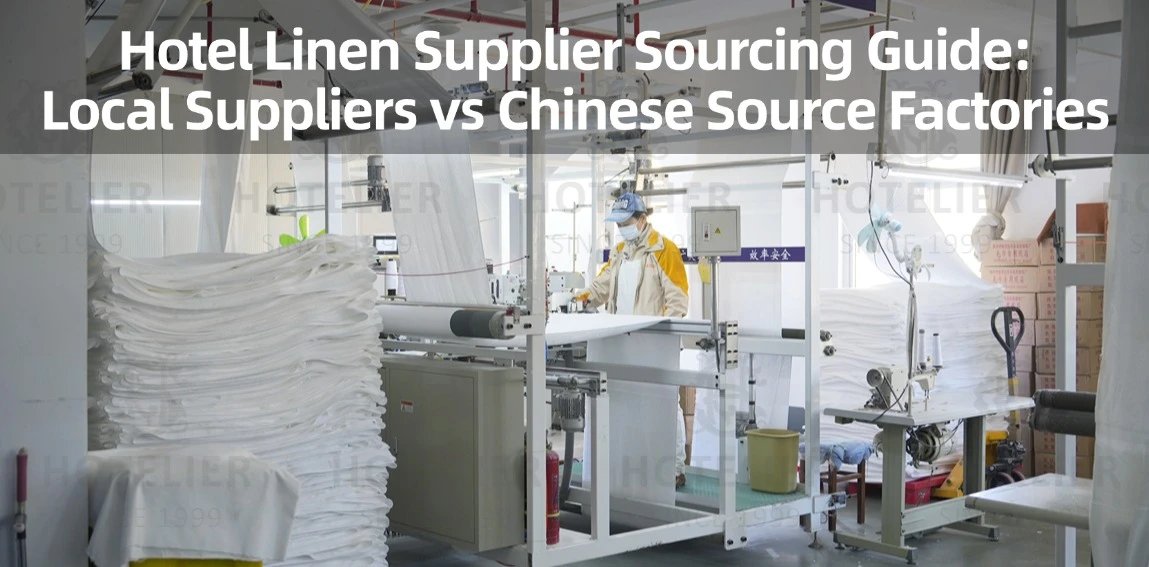
I. Core Comparison: Local Linen Suppliers vs Chinese Source Linen Factories
The table below compares multiple dimensions including cost, production capacity, international compliance certification, customization flexibility, after-sales service and supply chain risks to clearly show their differences:
|
Comparison Dimension |
Local Hotel Linen Suppliers |
Chinese Source Linen Factories |
|
Unit Product Cost |
High local labor and energy costs push unit prices up by 30%–60%; no discounts for small orders |
A complete textile industrial cluster reduces raw material and processing costs; unit prices drop by 20%–40% for bulk orders |
|
Production Scale & Capacity |
Small workshops or distributors with limited daily output, unable to fulfill full-container orders for large hotels |
Self-owned full production lines for weaving, mercerization, pre-shrinking and embroidery; monthly output can meet linen demand of over 100,000 sets for hotel chains |
|
International Compliance Certifications |
Mostly only local domestic safety test reports; few hold OEKO-TEX Standard 100 eco-certifications |
Complete export documents: OEKO-TEX certification, industrial laundry durability test reports, ISO quality management records |
|
Customization Flexibility |
Limited fabric options; rarely support custom deep-pocket fitted sheets or large-area embroidery |
Full-range customization: international King/Queen/Twin bed sizes, brand jacquard weaving, exclusive color matching formulas |
|
Batch Consistency |
Production outsourced to multiple small workshops, resulting in prominent color difference for replenishment orders |
Using fixed cotton raw materials and unified dyeing processes, effectively eliminating color differences in replenishment orders from different production batches. |
|
Long-Term Costs |
Fabrics have short service life under industrial washing, requiring frequent full-batch replacement |
Complete finishing processes support up to 200 industrial washes, cutting annual replenishment frequency |
Key Takeaways:
- If you operate a small boutique homestay with fewer than 10 rooms, have urgent restock demands, prioritize avoiding customs formalities and require instant delivery, choose local suppliers.
- Mid-tier hotels, star resorts and global hotel chains with more than 50 rooms are recommended to cooperate with Chinese integrated factories. Thanks to standardized durable fabrics and volume-based pricing, the total linen expenditure over three years can be reduced by 25%–35%.
II. Applicable Scenarios for the Two Sourcing Channels
Scenarios Where Local Linen Suppliers Are a Better Fit
- Independent small homestays with fewer than 10 rooms and extremely low annual procurement volume;
- Hotels facing sudden linen shortages during tourist peaks requiring 48-hour local delivery;
- Short-term pop-up hotels with an operation cycle of less than 6 months and no long-term restock needs.
Scenarios Where Chinese Integrated Factories Are a Better Fit
- Mid-to-high star hotels, resorts and hotel chains with more than 50 guest rooms;
- Cross-border hotel groups with multiple branches that require unified visual standards for linens;
- Long-term stable operating properties planning annual replenishment for over 3 consecutive years to control full-lifecycle consumable costs;
- Hotel brands that need complete international eco-certifications to pass local hospitality health audits.
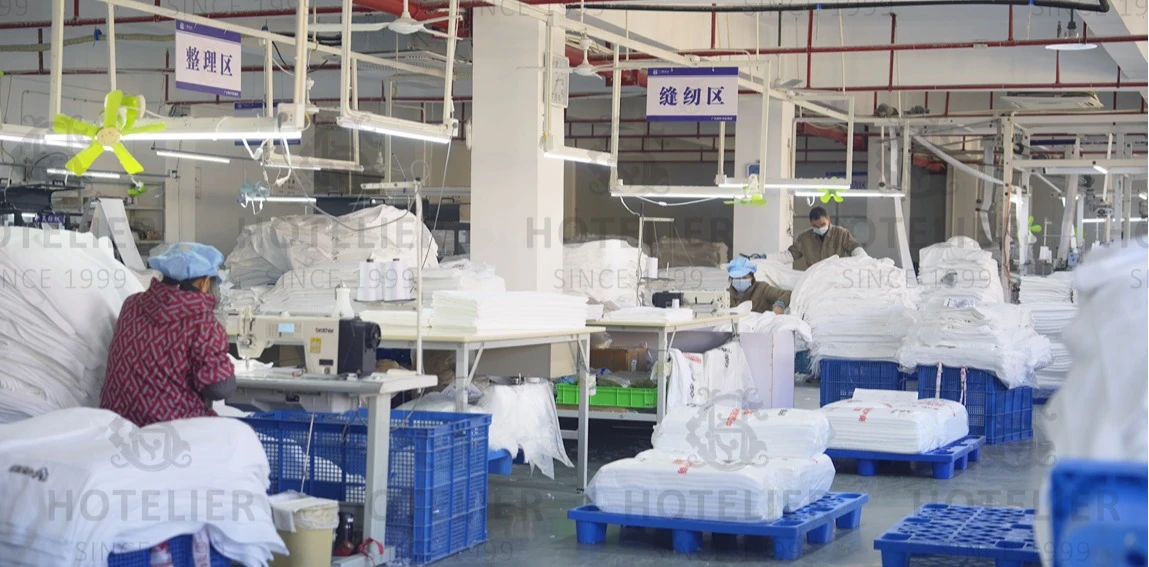
III. Mandatory Qualification Audit Standards for Two Types of Suppliers
Audit Checklist for Local Linen Suppliers
- Request local textile safety inspection certificates valid within the past 12 months;
- Conduct on-site factory visits to confirm independent sewing capacity (to avoid pure resellers with no production capability);
- Require written guarantees: fabric shrinkage ≤4%, color fastness ≥Grade 3;
- Clarify that the quoted price includes tax, embroidery and local delivery with no hidden fees;
- Confirm the replacement policy for stained and torn linens within 30 days after delivery.
Audit Checklist for Chinese Export Factories
- Verify OEKO-TEX Standard 100 Class I certification and third-party test reports for 100 industrial wash cycles;
- Request real-time workshop footage, factory audit reports and cooperation cases with overseas star hotels;
- Lock fabric technical indicators in contracts: shrinkage ≤3%, color fastness ≥Grade 4;
- Confirm provision of full customs clearance documents: packing list, commercial invoice and certificate of origin;
- Negotiate tiered volume discounts and written compensation clauses for delayed shipments.
IV. Standard Procurement Process for Cooperation With Chinese Linen Factories
Overseas hoteliers sourcing linens from Chinese manufacturers shall follow the 6-step risk-free procurement process below to avoid cross-border losses:
Step 1: Issue formal technical specification documents
List all international bed dimensions, deep pocket depth of fitted sheets, fabric GSM, weaving type, Pantone color numbers, embroidery sizes and industrial washing requirements, then sign and send to the factory for written confirmation.
Step 2: Conduct multiple rounds of fabric washing tests
Request fabric swatches, pre-production samples and full-room physical samples. Simulate local high-alkali industrial washing for at least 50 cycles to test pilling, shrinkage and fading performance; mass production can only be approved after passing the tests.
Step 3: Sign and seal pre-production samples as quality benchmarks
Both parties sign and seal one set of pre-production samples for retention. All bulk goods must fully match the fabric, stitching and embroidery standards of the sealed samples.
Step 4: Remote random inspection mid-production
Request the factory to send photos and videos when 50% of production is completed. For orders exceeding 200 room sets, a third-party inspection agency may be appointed for on-site quality checks.
Step 5: Verify all customs and certification documents before shipment
Double-check copies of OEKO-TEX certificates, test reports and shipping documents to prevent cargo detention due to incomplete paperwork.
Step 6: Arrange reasonable safety stock in advance
Calculate standard stock of 3–4.5 linen sets based on sea transit cycles. Place replenishment orders 45 days before stock depletion to avoid supply shortages during peak seasons.
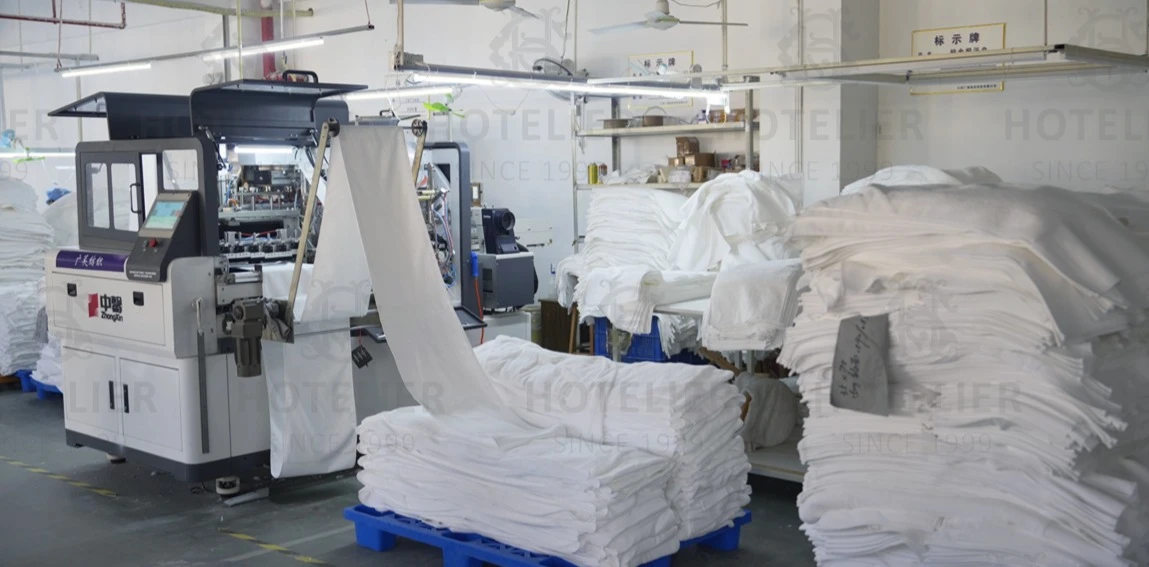
V. Common Procurement Risks & Targeted Solutions
Risks of Cooperating With Local Suppliers
Risk 1: Small suppliers secretly outsource production, leading to inconsistent fabric quality across batches
Solution: Conduct unscheduled on-site factory spot checks during production.
Risk 2: Incomplete fabric finishing results in low durability and high long-term procurement costs
Solution: Request free test samples for 30 washing cycles before signing formal orders.
Risk 3: Limited customization capacity fails to fit international deep mattress sizes
Solution: Provide full drawings of international bed dimensions in advance to confirm customization feasibility.
Risks of Cooperating With Chinese Factories
Risk 1: Long sea transit time causes temporary linen stockouts
Solution: Maintain a 10% safety buffer stock and prepare a backup plan for urgent air freight replenishment.
Risk 2: Tariffs and customs clearance fees are excluded from initial quotations
Solution: Require the factory to issue an all-inclusive quotation sheet listing all logistics, documentation and freight charges.
Risk 3: Time zone differences cause communication delays and slow problem resolution
Solution: Agree on a fixed daily communication window and assign a dedicated bilingual account manager before cooperation.
VI. Conclusion
The optimal hotel linen sourcing channel depends on your hotel scale, operation cycle, budget planning and long-term asset management goals. Local linen vendors deliver proximity and ultra-fast emergency replenishment, suitable for tiny short-term hospitality projects. Chinese integrated linen factories rely on complete industrial chains, full international certifications, powerful mass customization and lower total lifecycle cost, becoming the most cost-effective long-term choice for medium and large star hotels and global resort groups.
Whichever supplier type you select, standardized qualification audit, written parameter locking and pre-delivery sample testing are non-negotiable rules to eliminate pilling, shrinkage, color difference and after-sales compensation disputes. Professional Chinese hotel linen factories provide one-stop services covering custom design, large-scale production, third-party inspection and global door-to-door logistics, fully meeting the standardized linen procurement demands of overseas hotel brands.


