

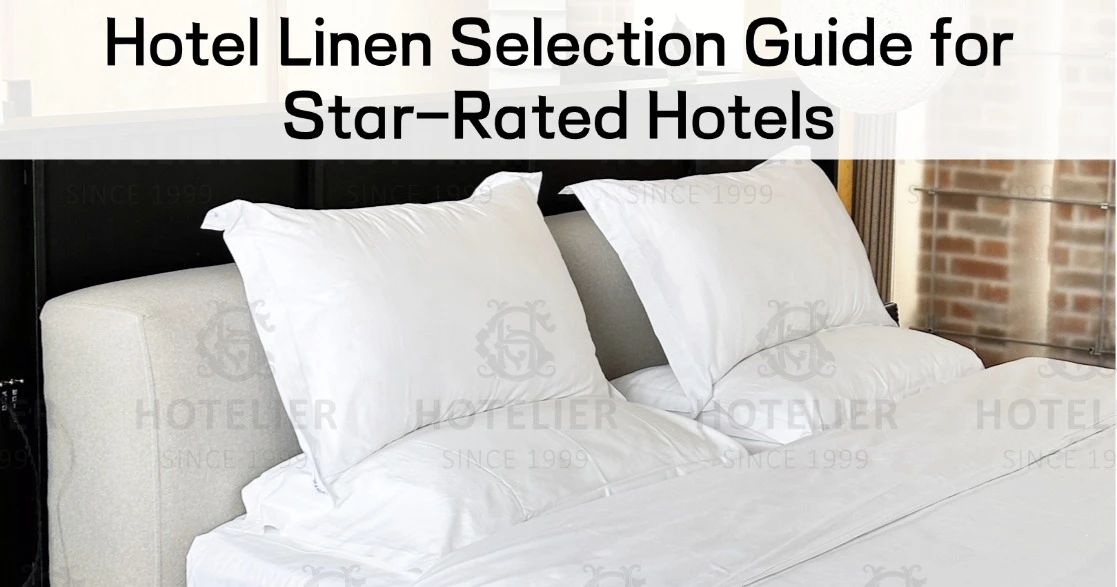
Hotel Linen Selection Guide For Star-Rated Hotels
Jul 06, 2026
After check-out, guests will quickly forget lobby decorations and front desk services. However, bed linens and bathroom towels accompany guests throughout their stay, and linen experience has become one of the core factors affecting hotels' online reviews. Statistics show that more than 58% of guests will slash hotel ratings significantly if linens turn rough, thin or faded after repeated washing, even when all other hotel facilities and services meet top standards.
Yet over half of hotel procurement teams only select linens based on thread count, ignoring the matching standard between fabric, GSM and hotel positioning. Low-cost mismatched linens wear out rapidly under high-temperature commercial laundry, triggering frequent guest complaints and pushing annual linen replacement costs up by nearly 20%. This guide sorts out exclusive linen matching plans for hotels of different star ratings, clarifies standards for fabric, GSM and full sets, and helps purchasers balance guest experience and long-term operating expenses.
I. Linen Specification Chart for Star-Rated Hotels
|
Hotel Tier |
Recommended Fabric Spec |
GSM |
Thread Count (TC) |
Core Advantages |
|
2–3 Star Chain Hotel |
40S*40S Polyester-Cotton Blend |
170–190 g/㎡ |
150–200TC |
Durable & cost-effective, withstand frequent bleaching |
|
4-Star Hotel |
60S*40S Combed Cotton |
200–230 g/㎡ |
200–300TC |
Soft touch, yellowing-resistant, balanced texture & cost |
|
5-Star Resort Hotel |
60/80S Long-Staple Cotton Sateen |
230–270 g/㎡ |
300–500TC |
Silky natural luster, customizable embroidered hotel logos |
Key Takeaways:
1. Fabric specifications must match hotel tier to avoid waste and poor guest experience. Low-cost polyester-cotton blends suit budget 2–3 star chains for low replacement spending, while high-count long-staple sateen is necessary for 5-star resorts.
2. GSM and thread count scale upward alongside hotel positioning. Higher GSM and TC deliver softer, more luxurious fabric but raise laundry energy and procurement costs, making them impractical for low-priced accommodation.
3. Mid-range boutique homestays with 60S combed cotton sateen, striking a perfect balance between wash durability and upscale guest feel.
II. Why Linen Specifications Need To Match The Star Rating Of Your Hotel
Yarn count, GSM and thread count must precisely match your hotel's star rating and room pricing. None of the three indicators can be ignored, and you should never choose products merely by hand feel or price.
For 2–3 star budget chain hotels and affordable homestays, blindly purchasing 60S or 80S high-count long-staple cotton sateen fabric may seem to upgrade room texture, yet it creates multiple hidden loss costs. Fine high-count yarns have weak fiber toughness and demand professional laundry treatment. Meanwhile, premium heavy-weight fabric comes with higher purchasing prices and laundry drying energy consumption. With low room rates, it is hard to offset linen expenses via room revenue, adding extra operational burdens.
In contrast, 4-star boutique and 5-star resort hotels that cut corners by adopting coarse yarn below 40S and thin low-GSM fabric will severely damage brand image. Coarse fabric feels stiff and scratchy, easily turns translucent and lacks premium texture. Insufficient fabric density leads to deformation and filler leakage after repeated commercial washing, which completely contradicts the comfortable, luxurious experience that high-end hotels promise. Even if huge investment is put into interior decoration and supporting services, substandard linens will dampen guest satisfaction.
Only by selecting fabrics with specifications matching your hotel tier can you strike a balance between guest experience, wash durability and long-term procurement costs, avoiding the two common pitfalls: cheap fabrics making rooms look shabby, and over-spec high-end fabrics wasting money.
III. Select Weave & Fabric GSM Based on Local Climate
Two mainstream weave types are widely used for star hotel linens, fitting different operating environments. Fabric GSM also directly determines drying time and energy consumption of laundry equipment.
Percale Weave
Balanced warp and weft yarn arrangement delivers outstanding air permeability. The fabric stays crisp and wear-resistant after over 100 wash cycles, making it the mainstream pick for coastal tropical hotels and high-traffic airport business hotels. Its only drawback is the lack of silky luster, failing to present a luxurious look in guest room photos.
Sateen Weave
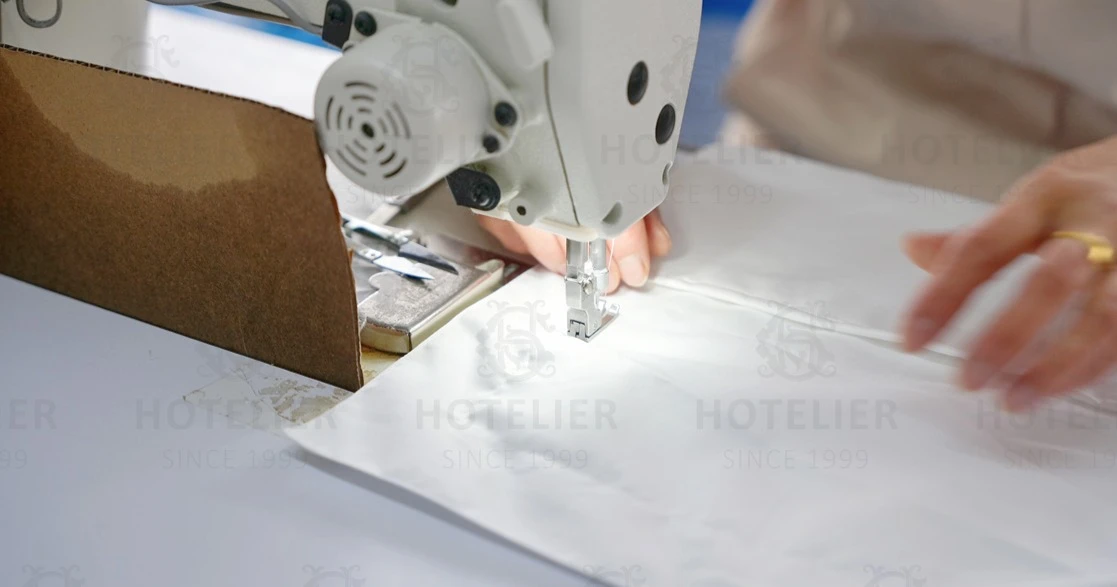
Most yarns lie on the fabric surface, creating a soft pearlescent sheen that perfectly matches minimalist high-end resort decor. However, exposed surface yarns suffer more friction damage, so reinforced stitching at the head and foot of beds is required during production. This weave suits inland temperate hotels with low guest turnover.
Laundry Energy Consumption Reference Table
|
GSM Range |
Drying Performance |
Applicable Hotel Scenarios |
|
170–200g |
Fast drying, low power cost |
Urban business hotels, high-occupancy homestays |
|
200–240g |
Balanced hand feel & energy loss |
Most 4-star and mid-range boutique hotels |
|
Over 240g |
Long drying cycle, high monthly electricity bills |
Exclusive for alpine luxury resorts in cold regions |
IV. Three Indispensable Finishing Processes for Star Hotel Linen
Most linen damage in daily operation stems from incomplete post-treatment rather than defects in raw cotton. Three core finishing procedures determine long-term wash durability:
- Mercerization: Boosts tensile strength and color fastness of cotton fibers, resisting yellowing after repeated washes. Unmercerized long-staple cotton will turn dull and pale after dozens of laundry cycles.
- Sanforizing and Calendering: Untreated standard fabric has a shrinkage rate of 5%–7%, while star hotel standards require shrinkage below 3%. Sanforizing eliminates internal fiber tension to prevent fitted sheets from deforming and failing to fit mattresses after washing.
- Singeing Anti-Pilling Treatment: High-temperature gas singeing burns off loose surface fibers, drastically reducing the risk of pilling after washing.
Qualified star hotel linens must pass over 100 commercial washing tests, with color fastness above Grade 4, no obvious pilling and seam slippage under 2mm.
V. Scientific Inventory Allocation
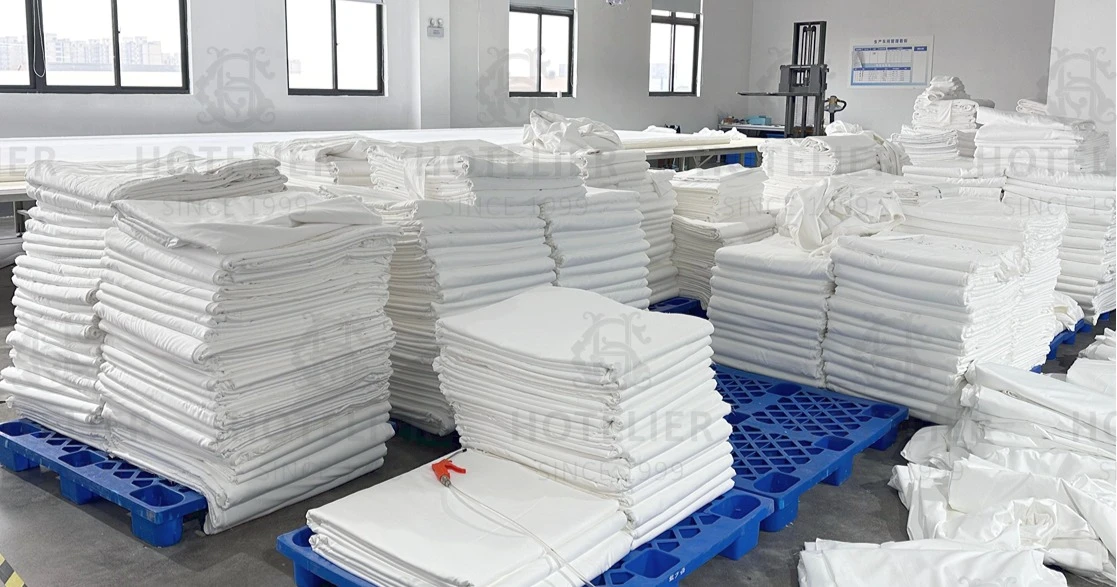
Many hotels only stock 2 sets of linens, which easily leads to linen shortages in peak seasons and forces costly emergency restocks. The industry standard turnover ratio is 3 complete linen sets per room: one laid in guest rooms, one circulating at the laundry plant, and one stored as spare stock.
Classified storage is equally critical: separate high-count sateen linens and poly-cotton linens to avoid damage caused by mixed washing. Replace bed sheets and duvet covers in full batches every 1.5 years, towels every 2 years, and mattress protectors annually to spread out large procurement expenses.
Conclusion
When selecting linens for star-rated hotels, do not merely focus on thread count or the soft hand feel of new samples. Purchasers need to match yarn count, GSM and weave according to hotel star rating and local climate, and verify complete mercerization, sanforizing and singeing finishing before mass orders. Meanwhile, implement moderate personalized customization based on brand positioning, paired with reasonable inventory turnover plans to control operating costs in all dimensions.
Well-matched premium linens act as an understated highlight of hotel service, effectively lifting guest satisfaction and online hotel ratings. With 30 years of deep experience in high-end linen manufacturing, HOTELIER maintains long-term partnerships with major global star hotel groups. We own full independent production lines from spinning to finished products, and can deliver one-stop customized linen solutions complying with international OEKO-TEX standards.


