Full Procurement Guide For Hotel Linen
Jun 07, 2026
The full procurement of hotel linen covers seven complete phases from initial inquiry to post-delivery after-sales service: preliminary communication, in-depth specification verification, sample confirmation & sealing, formal contract signing, whole-process production tracking, incoming goods inspection and after-sales claim settlement. When buyers check and inquire item by item following this standard workflow, they can effectively steer clear of prevalent industry risks including raw material skiving, downgraded workmanship, delayed shipment and irresponsible after-sales prevarication.

Procurement Procedure Guide
|
Procurement Stage |
Core Work |
Key Control Point |
Common Hidden Risk |
|
1.Initial Communication |
8 items basic inquiry |
Screen unreliable middlemen |
Hidden extra embroidery & freight cost |
|
2.In-depth Verification |
Fabric+cert+capacity audit |
Check real raw material & certificates |
Fabric count falsification |
|
3.Sample Confirmation |
Sample test & dual-side sealing |
Sealed sample as acceptance rule |
Bulk goods downgrade vs sample |
|
4.Contract Signing |
Detail all specs & penalty |
Ban vague descriptive words |
Disputes on overdue compensation |
|
5.Production Follow-up |
Mid-term & pre-ship inspection |
Spot check semi-finished goods |
Raw material replaced secretly |
|
6.Delivery Acceptance |
On-site sampling inspection |
Confirm return policy |
Reject unqualified bulk goods |
|
7.After-sales Service |
Usage problem compensation |
Long-term replenishment agreement |
Refuse after-sales maintenance |
Key Takeaways:
- Pre-screening cuts hidden costs: Full eight-point preliminary inquiry helps filter irregular suppliers and avoid undisclosed extra charges for embroidery and shipping at the very beginning of cooperation.
- Spec locking eliminates material fraud: Detailed fabric verification plus signed sealed samples set fixed acceptance standards, effectively preventing suppliers from downgrading raw materials and falsifying yarn counts for bulk production.
- Written contract avoids contractual disputes: Explicit clauses on specification, delayed penalty and return rules replace ambiguous wording to settle potential conflicts over delayed delivery and defective returns.
- Mid-production tracking blocks unauthorized material swap: In-process inspection of semi-finished items restricts secret raw material replacement during mass production and stabilizes finished product quality.
- Complete after-sales clause safeguards long-term cooperation: Clear compensation and replenishment terms bind after-sales responsibility to prevent suppliers from evading maintenance obligations after bulk delivery.
Phase 1: Initial Online & Phone Negotiation
When first connecting with suppliers, purchasers shall focus on basic quotation checks to quickly filter out unqualified and unreliable vendors:
- Product Range Confirmation: Does the factory manufacture full-range linen including flat sheets, duvet covers, pillowcases, towels and bathrobes? What ready-made styles are available in stock?
- Quotation Breakdown: Is the quoted price inclusive of tax, custom logo embroidery charge and domestic land transportation cost? How much is the separate plate making fee for brand embroidery?
- Minimum Order Rules: Clarify respective MOQ for in-stock goods and logo-customized products; is split small order acceptable for boutique homestays with limited procurement volume?
- Standard Lead Time: Confirm delivery days of spot products and regular production cycle of customized orders, plus possible delivery postponement during peak tourist seasons.
- Fabric Options: Get separated quotations of long-staple cotton and regular cotton with matched yarn count and fabric weight data attached.
- Sample Charge Regulation: Learn the exact sample cost and whether sample payment can be deducted from bulk order payment after formal order confirmation.
- Factory Background: Distinguish self-owned production factory from middleman sourcing externally; check availability of on-site factory audit or real-time video workshop visiting.
- Past Cooperation Reference: Ask for real cooperative star hotel cases and available contact information to verify supplier's market reputation.
Phase 2: In-depth Detailed Verification on Craft
After agreeing on preliminary pricing, carry out thorough inspection to avoid hidden material downgrade and concealed cost traps:
1. Fabric & Craft Audit
Confirm cotton origin, fiber length of long-staple cotton and consistency between marked and actual yarn count; verify finished goods go through mercerization and pre-shrinking finishing with written guaranteed shrinkage rate. Check sewing standards such as double stitching and corner reinforcement for bedding, plus permissible weight error of towels; confirm reactive or pigment dyeing to avoid color bleeding after repeated industrial washing.
2. Certification & Customs Documents
Check access to scanned original ISO9001, OEKO‑TEX certificates and third-party fabric test reports; confirm free supply of complete customs declaration papers for export clearance.
3. Output & Peak Season Risk Control
Learn factory equipment quantity and workshop space, seasonal capacity expansion solutions to prevent order backlog; ensure signed fixed-price orders won't face arbitrary price hikes caused by raw material market inflation.
Phase 3: Sample Checking & Sealing
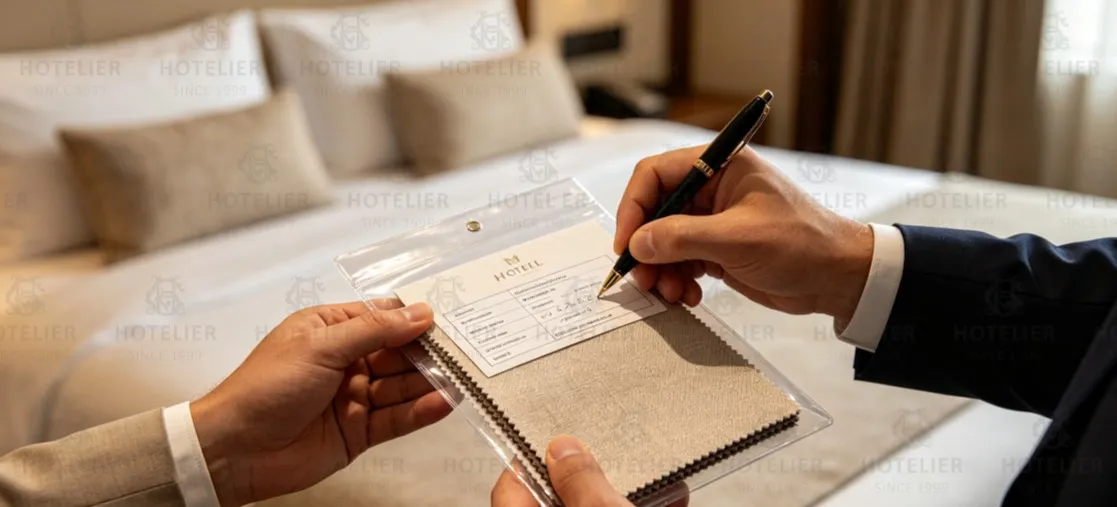
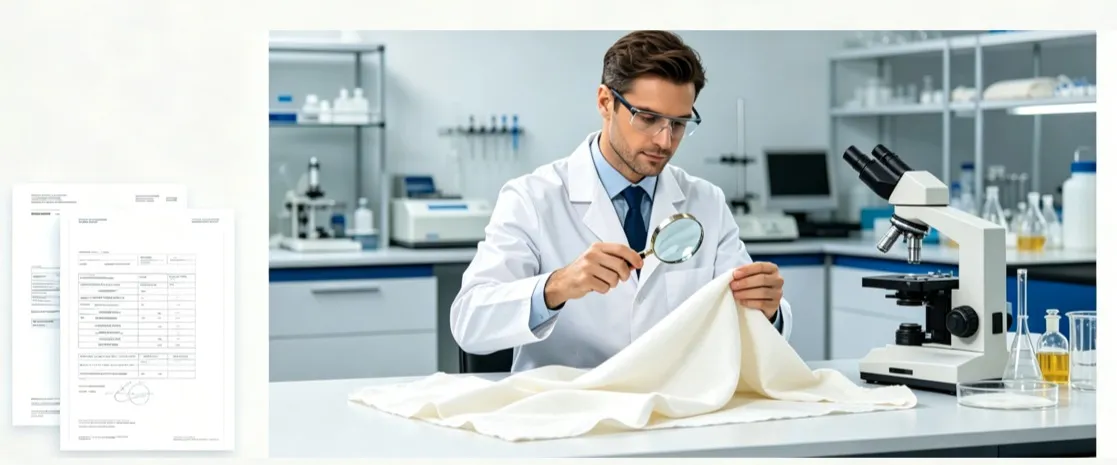
Upon receiving trial samples, buyers can either send items to third-party testing institutes or repeatedly launder samples with hotel commercial laundry equipment to test real shrinkage, pilling and color fading performance. Once samples pass inspection, both supplier and purchaser sign and seal physical samples with detailed fabric parameter, weight and craft notes, which legally serve as the only inspection standard for bulk production. All compensation clauses for inconsistent bulk goods against sealed samples shall be written into formal contracts in advance.
Phase 4: Contract Finalization before Order Placement
List detailed specification of fabric composition, weight, yarn count, finished dimension and processing technology instead of vague descriptions like "national standard high-grade product". Specify exact delivery date and penalty ratio for delayed delivery, alongside clear return-and-exchange rules and freight liability for unqualified items found during incoming inspection. For international orders, separate production cycle and ocean shipping schedule and define compensation regulations for damaged or lost cargo in transit.
Phase 5: Production Tracking & Pre-shipment Inspection
During mid-production, demand real-time production photos and semi-finished details to stop unauthorized raw material replacement halfway. After bulk production finishes, arrange on-site inspection or ask suppliers to shoot full batch product pictures; hold delivery if products fail preset quality standards.
Phase 6: Goods Receipt & After-sales Management
Work out disposal plans for damaged outer package and specified replacement period for underweight, downgraded fabric or defective craftsmanship on receiving day. Define compensation terms if massive pilling or over-standard shrinkage emerges within 1 to 3 months of formal usage. Confirm identical fabric and craft for repeated restock to eliminate batch color difference, exclusive preferential price and priority production for long-term regular clients, as well as free plate reuse for follow-up logo supplementary orders.

FAQs
1.What is the lead time for pre-production samples and mass production?
Custom linen with embroidered logos or resized specification needs 20~35 working days for full production and shipment, while plain ready-made bedding can be delivered within 7~10 working days; final schedule depends on fabric grade and customization complexity.
2.How to guarantee stable size and outstanding durability after frequent commercial laundry?
All HOTELIER linens are processed with professional mercerization and pre-shrinking treatment to control shrinkage within ±3%. With reinforced edge stitching, items stay intact, soft, anti-pilling and colorfast after hundreds of cycles of high-temperature industrial washing.
3.Can your firm provide full certification documents for overseas customs clearance?
Yes. HOTELIER owns ISO9001 and OEKO‑TEX Standard 100 certifications and provides complete test reports, raw material certifications and full set of customs documents to support smooth global clearance.
4.How to cut procurement cost without hurting product quality and service life?
We cut extra middleman markup via self-owned full production and optimized manufacturing technique, matching proper fabrics for different hotel tiers: long-staple cotton for mid-to-high-end hotels and cotton blend for economy inns to strike balance between cost and durability.
5.How does HOTELIER protect clients' customized logos and exclusive patterns?
We sign non-disclosure agreements before cooperation and encrypt all drawing and parameter files internally to prevent design leakage.
6.What processing prevents color fading, loose edge yarn and uneven cloth texture?
Wide overlock stitching avoids fraying edges; constant-temperature reactive dye locks color effectively. Double inspection on grey fabric and finished products eliminates inherent fabric defects from production source.
Conclusion
Smart linen procurement never focuses merely on price comparison. The core lies in staged detailed verification, written quality confirmation, sealed-sample quality control and clear after-sales liability definition. Abiding by this guide helps hotels cut procurement expenditure, eliminate common risks including material cutting corners, overdue delivery and missing after-sales support, so as to build long-term stable cooperative supply.