The Guide To Creating Star-Rated Bedding For Hotels
Jun 06, 2026
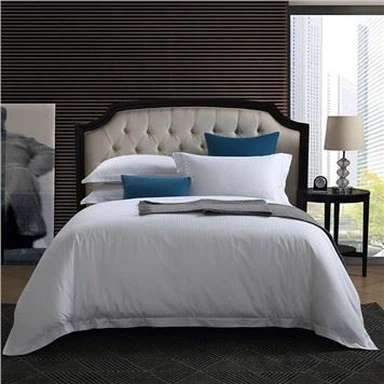
Premium sleep experience on crisp, soft and properly supportive beds is one of the core competitive edges of upscale star hotels. Many mid-tier hotels and homestays fail to deliver consistent star-level bedding comfort due to misinformed purchasing, misleading marketing traps and irregular bed-making procedures. Based on actual hotel operational needs, this guide covers fabric selection, thread count criteria, standard bed-making rules, purchasing tips and daily laundry maintenance to help facilities build standardized star-grade bedding and boost guest satisfaction & repeat business.

Fabric Thread Count: Industry Standard For Hotel Bedding Procurement
What is yarn count?
Yarn count (marked as "S" in the textile industry) is an international standard unit for measuring yarn thickness. Under the widely used British cotton count standard, the larger the S number, the finer the single cotton yarn, and a higher count means finer yarn. For example, 40S represents relatively coarse yarn commonly used for economy and mid-range hotel linen, 60S provides a comfortable experience, while 80S and above are fine high count yarns for high-end star rated hotel bedding.
Core Rule:
The higher the count→ the finer the yarn→ and the softer and smoother the fabric, but it is more prone to wear and tear.
The lower the count→ the thicker the yarn→ and the thicker and more wear-resistant the fabric, but the hand feel is relatively hard.
with three mainstream commercial grades below:
|
Parameter |
40S |
60S |
80S |
|
Yarn Thickness |
Relatively thick staple yarn |
Fine combed long-staple yarn |
Ultra-fine single-ply long-staple yarn |
|
Fabric Texture |
Slightly rough, stiff and crisp |
Delicate, soft with subtle satin luster |
Silky smooth, close to silk touch |
|
Standard Weaving Density |
200~210TC |
290~310TC High Density |
380~450TC Ultra High Density |
|
Commercial Durability |
★★★★☆ |
★★★☆☆ |
★★☆☆☆ |
|
Industrial Wash Resistance |
Withstands hundreds of high-temperature washes |
Stable performance after repeated industrial washes |
Daily needs to be gently maintained |
|
Suitable Hotel Type |
Budget hotels, chain homestays, economy business inns |
3~5 star standard hotels, mid-range boutique homestays |
Luxury 5-star hotels, high-end resorts, boutique design hotels |
|
Core Positioning |
Cost-effective basic configuration |
Industry golden standard for upscale properties |
Premium luxury customization |
Key Core:
1,40S: Standard cotton bedding for budget hotels and homestays. Durable and breathable for regular daily replacement and cost-effective for basic accommodation needs.
2,60S: The preferred specification for 4 & 5-star hotels. Balanced in softness, air permeability and wash resistance; fabric stays smooth after repeated industrial washing. 60s is the industry's golden pick balancing cost, comfort and service life for most upscale properties.
3,80S: Featuring a silky smooth texture and outstanding texture, it is the preferred material for customized rooms in top luxury resort hotels. But the yarn has fine fineness, the fabric is delicate, and requires fine maintenance. When making a purchase, it is important to distinguish between genuine and fake products.

Three Common Misconceptions In Hotel Bedding Sourcing
Misleading market claims often trigger unnecessary overspending and negative guest feedback; three critical fallacies need avoidance:
Misconception 1: Glossy Satin Equals Luxury Hotel Bedding
High gloss reflective satin fabric is widely promoted by many businesses as high-end luxury hotel bedding, but it is rarely used by officially certified star rated hotels. After repeated bleaching and industrial washing, the ultra smooth satin surface has a floating smooth layer that is easily hooked, causing the fabric to be frequently hooked and the surface to become fuzzy. The cost of frequent replacement increases sharply. Qualified star rated hotels generally use satin: it has excellent breathability, cools and dries the skin, has strong wear resistance and deformation ability, and is fully suitable for long-term standardized daily operation and centralized laundry treatment of hotels.
Misconception 2: Stiffness of New Bedding Indicates Poor Quality
Most brand-new hotel linens feel slightly stiff on first touch, which does not mean poor raw material quality. Manufacturers deliberately apply high-temperature ironing process during post-production to reduce natural fabric creases and ease daily bed-making for housekeeping staff. Residual starch will wash away gradually after 3 to 6 regular sanitized laundry cycles, turning the fabric fluffy, soft and skin-friendly for optimal guest sleeping experience.
Misconception 3: All-White Linens Are Purely for Aesthetics
Uniform pure-white bedding is selected primarily for comprehensive operational practicality rather than single luxury appearance decoration:
- White fabric bears strong tolerance to high-temperature bleaching and thorough chemical sanitization to eliminate stubborn stains, hidden bacteria and harmful dust mites strictly in line with international hotel hygiene inspection codes;
- Coffee, food, cosmetic stains stand out visibly on white cloth for quick housekeeping inspection and spot cleanup, greatly improving room cleaning efficiency;
- Consistent pure white appearance unifies whole guest room decoration style and streamlines inventory sorting & centralized laundry categorization to reduce hotel daily management cost and improve overall operational efficiency.

Standard Five-Layer Bed-Making System for Star Hotels
Improper layered arrangement is the main reason ordinary properties cannot match star hotel sleeping comfort. The industry-standard five-layer construction balances cushioning softness and stable support:
|
Layer No. |
Component Name |
Core Function |
Standard Specification |
Key Requirement |
|
1 |
Mattress Topper |
Core comfort booster; upgrades softness without compromising support |
2~3cm thick cotton-filled pad for 4-star & above hotels |
Must be hypoallergenic, breathable and non-sagging after long-term use |
|
2 |
Fitted Sheet |
Fixation layer; wraps mattress and topper tightly to prevent shifting |
Deep-pocket design with full-around elastic edge |
Must fit mattress size perfectly, no wrinkling or displacement during sleep |
|
3 |
Flat Top Sheet |
Creates hotel's signature crisp sleeping surface; isolates body from padding |
Plain-weave cotton fabric with matched yarn count & density |
Must be breathable, smooth and able to maintain flatness after repeated washing |
|
4 |
Separate Duvet Cover & Inner Fill |
Sanitizable outer layer + long-lasting warm inner core |
Duvet cover with hidden zipper closure; fluffy hollow-fiber/down-alternative fill |
Duvet cover must be replaceable per guest stay; inner core must retain fluffiness without frequent washing |
|
5 |
Pillow Set (2 Soft + 2 Firm) |
Customized support for different sleeping postures |
Soft low-loft pillow for back/stomach sleepers; firm high-support pillow for side sleepers |
All pillows must come with waterproof inner protectors to block sebum, sweat and dust mites |
Key Core:
- Mattress: Core comfort booster. Added atop firm base mattresses to upgrade softness without compromising supportive performance, preventing soreness from overly hard beds or sagging from overly soft ones.
- Fitted sheet: Fixation layer wrapping mattress and topper tightly to stop shifting, wrinkling and displacement during guests' sleep and maintain neat bed surfaces.
- Flat top sheet: Creates the hotel's signature crisp sleeping surface, separating guests from underlying padding while enabling continuous air circulation for all-night dry comfort.
- Separate duvet cover & inner fill: Star hotels reject all-in-one stitched duvets. Duvet covers get replaced and sanitized per guest stay while inner duvet cores avoid frequent washing, retaining fluffiness and reducing odor and replacement expenses long-term.
- Pillow set: two soft + two firm: Customized for varied sleeping postures: soft pillows for back/stomach sleepers and firmer supportive pillows for side sleepers. All pillows come with waterproof inner protectors blocking sebum, sweat and dust mites to extend pillow core service life.
Hotel Bedding Procurement: Channel Pros & Cons to Avoid Rip-offs
1. Official hotel retail stores
Highest markup with identical 60s bedding priced nearly double; extra cost only covers branding without fabric upgrade, unsuitable for bulk procurement except sample display.
2. Supermarket-exclusive hotel bedding lines
Most are counterfeit blends of cotton and polyester with falsified high thread counts. Heavy, poorly breathable and prone to pilling after washing, failing star-level hygiene and comfort standards.
3. Purchase directly from the source factory (the best choice for star rated hotels)
Compliant thread count, complete quality inspection certificates and stable performance against frequent commercial laundering; prices are 30%–40% lower than retail brand stores, the dominant supply option for chain star hotels.
Advanced Bedding Upgrades to Surpass Regular Star Hotel Standards
To create a unique selling point for guest rooms, three differentiated linen upgrade plans can be implemented to widen the experience gap from the details of bedding, effectively enhancing the sensory experience and high praise rate of guests:
1. Upgrade long staple cotton fabric: Conventional linen materials mostly use ordinary cotton, with residual chemical additives in planting and printing and dyeing processes; Selected high-quality long staple cotton fabric, without excessive harmful chemical coatings, with a delicate and skin friendly touch, low sensitivity and breathability, greatly improving the sleeping level of guest rooms.
2. Seasonal fabric replacement: Use breathable cotton and linen bed sheets for heat dissipation in summer, and switch to high-density thickened cotton for warmth in winter.
3. Divided by weight, the bedding core is stocked: thin bedding for spring and summer to prevent stuffiness and night sweats, high fluffy and thick bedding for autumn and winter to lock in temperature, achieving comfortable accommodation throughout the season.

Standard Laundry & Replacement Schedule for Long-Term Bedding Maintenance
Improper cleaning shortens linen lifespan drastically and ruins premium sleep feel:
Laundry Specifications
All sheets, duvet covers and pillowcases washed at 60°C to sanitize germs and mites;
Fabric softener strictly forbidden: it leaves an air-blocking film on yarn causing stuffiness and hardening. A small amount of white vinegar added in final rinse naturally softens fabric and removes residual detergent.
Replacement Cycle (Industry Standard)
Flat sheets, duvet & pillow covers: full replacement every 1–2 years
Sleeping pillows: annual full renewal
Mattress toppers & duvet cores: bulk replacement every 3–5 years

Conclusion
Luxury star-level bedding experience relies not on exorbitant high-end raw materials, but on standardized fabric specifications, regulated five-layer bed setup, reliable factory sourcing and scientific daily maintenance. By mastering thread count rules, steering clear of procurement pitfalls and enforcing uniform bedding management, hotels can consistently deliver star-quality rest, lift guest ratings and build lasting core competitiveness.