Hotel Towel Procurement Guide: Types, Fabrics and GSM Selection
Jun 13, 2026
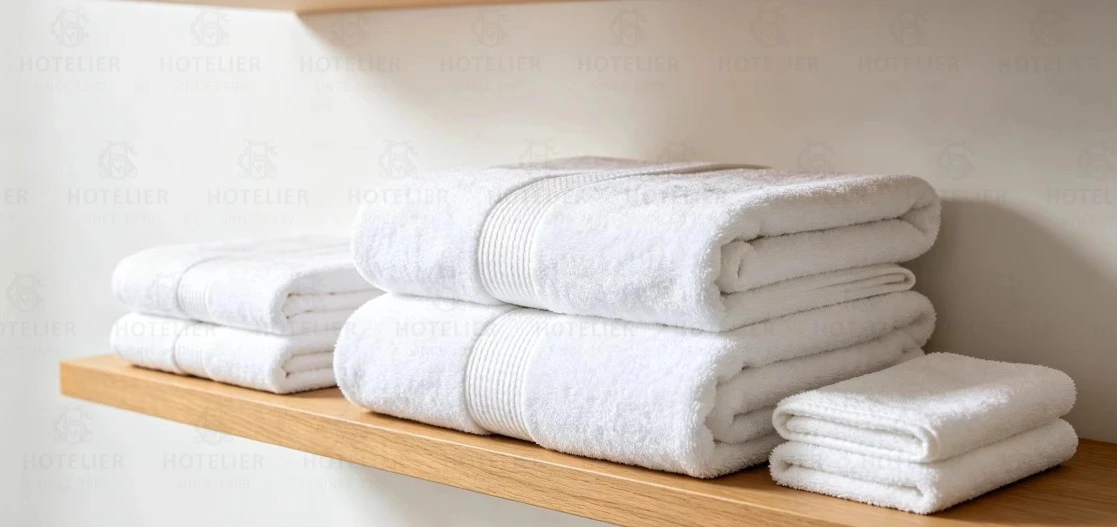
Towels are indispensable linen products in hotel guest rooms and a key detail that directly reflects a hotel's service grade and operational standard. Unlike household towels that are used occasionally, hotel towels need to withstand high-frequency industrial washing, repeated cyclic use, and meet strict requirements for comfort, hygiene and appearance. In the international hotel industry, guest room towels are categorized into four standard types: face cloth, hand towel, bath towel and bath mat. 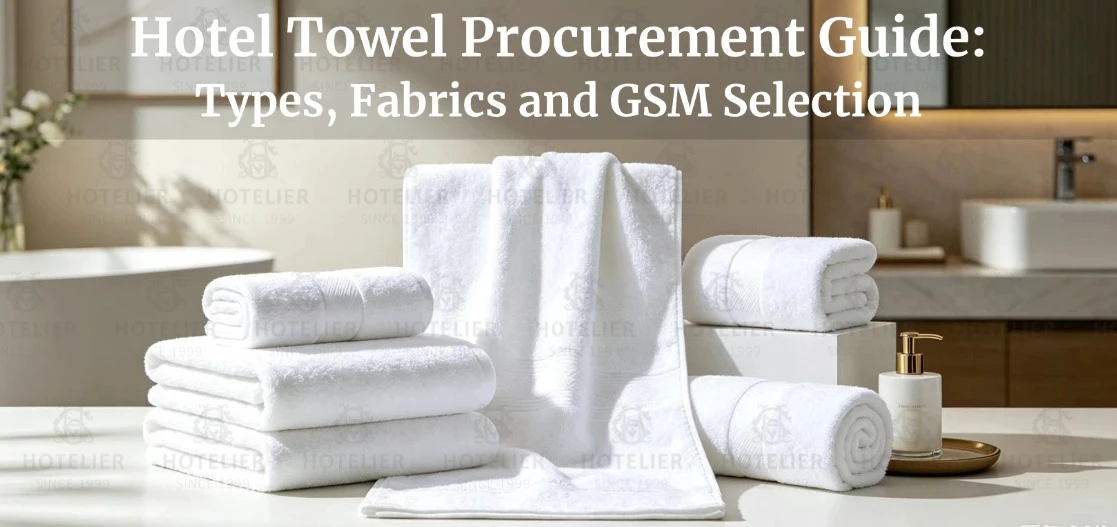
Hotel towel procurement should not merely focus on price and temporary hand feel. It is essential to take commercial washing conditions, long-term loss rate and international unified standards as the core. Scientific classification and standardized selection can effectively cut down the recurring cost of linen replacement in hotel operation. Meanwhile, high-quality towels optimize guests' staying experience subtly and steadily, helping hotels build a better service reputation and core competitiveness in the hospitality market.
Each type has fixed specifications, functional positioning and usage scenarios, and cross-use is not allowed in standardized hotel management. Combined with professional evaluation standards from overseas hotel linen institutions, this guide elaborates on towel categories, fabric materials, international GSM grading, yarn specifications, weaving techniques, quality inspection and targeted purchasing plans for different hotel tiers, providing comprehensive references for hotel procurement and daily operation management.
1 classification & Functional Introduction of Four Standard Hotel Towels
The four types of hotel towels are designed for different usage demands, with unified sizes and performance requirements in the global hospitality industry.- Face Towel
- Hand Towel
- Bath Towel
- Floor towel

- Combed Long-staple Cotton
- Ordinary Combed Cotton
- Bamboo Fiber
3 International GSM Weight Grading Standard
Different from the domestic way of counting yarn count, the global hotel linen industry adopts GSM (Grams per Square Meter) as the core index to judge towel thickness, density and grade. The higher the GSM value, the thicker and fuller the towel is.- 400–500 GSM
- 500–600 GSM
- 600–700 GSM
4 yarn Specification Selection
Hotels operate with large-scale and long-term laundry cycles, so yarn structure directly affects the loss rate and service life of towels.1.Double-strand Yarn
The optimal option for commercial scenarios. With a tight structure and strong tensile resistance, it can adapt to high temperature and high-speed industrial washing. Its service life is nearly twice longer than towels made of single-strand yarn, and it is not prone to loose threads and deformation.2.High-count Fine Yarn
The surface of towels woven by high-count fine yarn is smooth and neat with almost no floating lint, which is perfect for high-end hand towels. The downside is the high fabric density leads to slightly weakened water absorption.3. Zero-twist Yarn
Zero-twist yarn towels have an ultra-soft touch and fast water absorption, popular as featured products. But the loose fiber structure results in poor wear resistance. They are easy to deform and shed lint after about 20 washes, so they are not suitable for large-batch commercial use.
5 Main Weaving Crafts & Application Scenarios
With the same fabric and GSM value, weaving craft decides the water absorption, appearance and durability of towels.- Double Terry Loop Craft
- Velour Craft
- Jacquard Craft
- Waffle Craft
6 Quality Inspection & Purchasing Guidelines
Referring to overseas field test standards, hotel purchasers must check four core indicators during acceptance.1.First, lint performance: qualified towels only produce a tiny amount of floating lint after rubbing; massive linting means inferior raw materials.
2.Second, color fastness: select towels with reactive dyeing technology, which have no pungent odor and will not fade or stain skin after washing.
3.Third, water absorption: qualified towels should soak and sink within 3 seconds when placed on the water surface.4.Fourth, commercial wash resistance: confirm the towels can withstand 80 to 100 times of industrial washing without hardening, deformation or damage.
7 Targeted Purchasing Solutions for Different Hotel Tiers
- For budget hotels, choose ordinary combed cotton towels of 450–500 GSM with double-strand terry loop craft to balance cost and basic performance.
- For mid-range business hotels, prioritize 500–600 GSM long-staple cotton towels with double terry loop, the most cost-effective combination in the industry.
- For high-end star hotels, adopt thickened towels above 600 GSM with jacquard or velour customization to highlight premium positioning.