Hotel Disposable Guestroom Amenities Procurement Guide
Jun 09, 2026
When guests step into the hotel bathroom, thoughtful disposable amenities always deliver a warm experience. For high-quality disposable guestroom supplies, low price is never the core advantage. What truly matters are safety compliance, consistent user experience and durability for long-distance ocean transportation. Many hotel purchasers only focus on cutting upfront costs by choosing ultra-low-price products, which eventually lead to frequent customer complaints, bulk product scrapping and costly emergency restocking. This practical procurement guide is compiled for global buyers, helping you select reliable suppliers and avoid common procurement pitfalls.
1. Definition & Main Categories of Hotel Disposable Amenities
1.1 What Are Hotel Disposable Amenities?
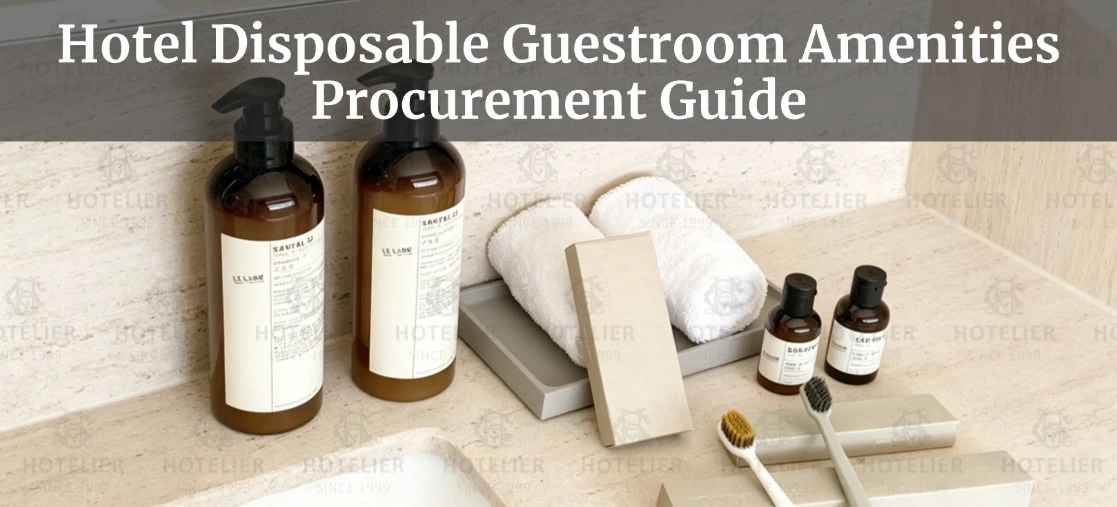
Hotel disposable amenities refer to one-time-use bathroom supplies placed in guest rooms for temporary stay. They save guests the trouble of carrying personal toiletries. All products will be replaced after check-out, ensuring room hygiene and preventing cross-infection among guests. They are essential consumables for homestays, business hotels and high-end resorts.
1.2 Main Product Categories
Disposable guestroom amenities are mainly divided into three series: foot wear, toiletries and general room supplies. Different hotels match product sets according to their star rating. Luxury resorts adopt a full range of amenities, while budget inns only keep basic items to control costs.
|
Category |
Specific Products |
|
Foot Wear |
Disposable slippers |
|
Toiletries |
Shampoo, body wash, hair conditioner, body lotion |
|
General Room Consumables |
Dental set, comb, shower cap, makeup set, shaving kit, sewing kit, soap |
1.3 Raw Material Selection
Raw materials directly determine product safety, touch feeling and environmental performance, which is the key difference between low-grade generic goods and high-end customized products.
Disposable Slipper Fabrics
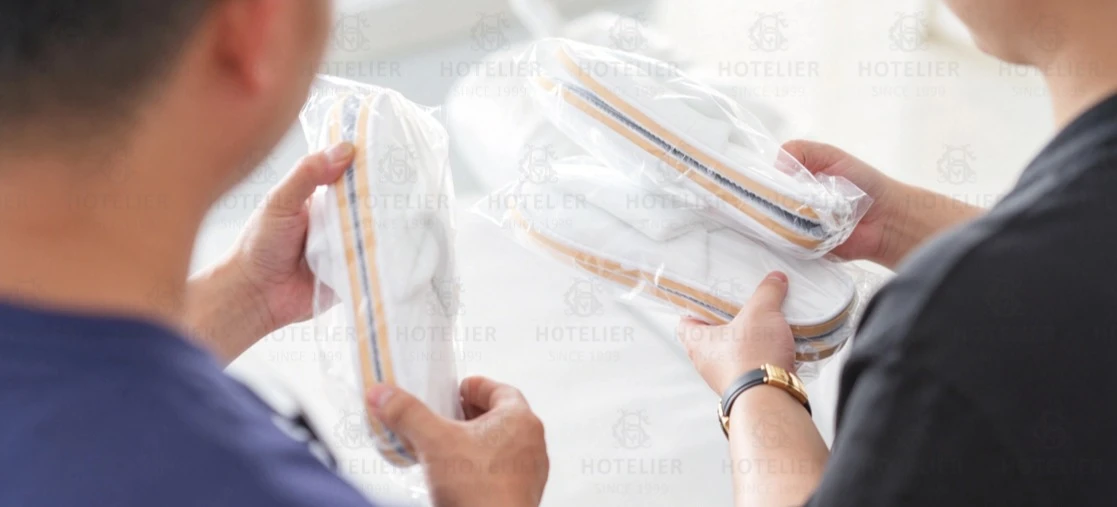
Non-woven Fabric: Soft and skin-friendly, lint-free and tear-resistant. It maintains neat appearance after repeated use, balancing comfort and durability, widely adopted by high-star hotels.
Pearl Cotton: High-density composite material with fluffy and cloud-like softness. It is breathable, sweat-proof and shock-absorbent, bringing a relaxing wearing experience.
Linen Blend Fabric: Features natural breathable texture with excellent moisture absorption. It is wrinkle-resistant, pill-proof and durable, presenting understated premium texture.
Toiletry Liquid Materials
Premium products adopt cosmetic-grade plant surfactants with mild formulas. Budget items use standard industrial raw materials for cost control. Plant essential oil formulas are specially customized for eco-friendly boutique hotels.
Packaging Materials
Food-grade PE film is applied to prevent leakage and damage during ocean shipping. Outer cartons include 3-layer and 5-layer corrugated boxes; thickened 5-layer boxes are recommended for full-container large shipments.
Advantages of Degradable Materials for High-end Hotels
As the global tourism industry accelerates green transformation, many countries have issued environmental regulations to restrict non-degradable plastic products. Degradable amenities can smoothly pass customs inspection without detention. Meanwhile, eco-friendly supplies become a unique selling point to attract environmentally conscious travelers and boost online reviews. Although the unit cost rises slightly, the brand value it creates far exceeds the material cost difference, so major luxury hotel groups have listed degradable materials as the unified procurement standard.
Practical Tips to Avoid Inferior Raw Materials
Adopt two verification methods to prevent suppliers from replacing qualified materials with low-quality ones:
Sample Comparison: Keep signed physical samples before mass production. Conduct random inspection on delivered goods, and check fabric thickness and liquid smell. Obvious differences mean raw material downgrade.
Qualification Inspection: Formal manufacturers can provide material test reports, MSDS and food-grade packaging certificates. Suppliers unable to offer relevant documents usually use recycled inferior materials.
2. Production Technology: Distinguish Standard Workmanship & Shoddy Work
2.1 Standard Production Specifications
|
Product |
Standard Craftsmanship |
Inferior Cost-cutting Craftsmanship |
|
Disposable Slippers |
High-temperature seamless heat sealing; full-surface eco-hot melt glue bonding; eco-friendly ink printing & embroidery |
Intermittent edge sealing (easy to crack); partial glue dotting (easy to unglue) |
|
Toiletry Bottles |
Full-automatic constant temperature filling; high-frequency aluminum foil sealing |
Manual filling; loose sealing (easy leakage) |
|
Outer Packaging |
Individual sealed inner package; 5-layer carton + shockproof filler |
Simple packing & thin carton (easy damage in transit) |
2.2 Main Customization Solutions for Hotel Brands
Silk-screen LOGO: Low minimum order quantity, ideal for small-batch customization of homestays.
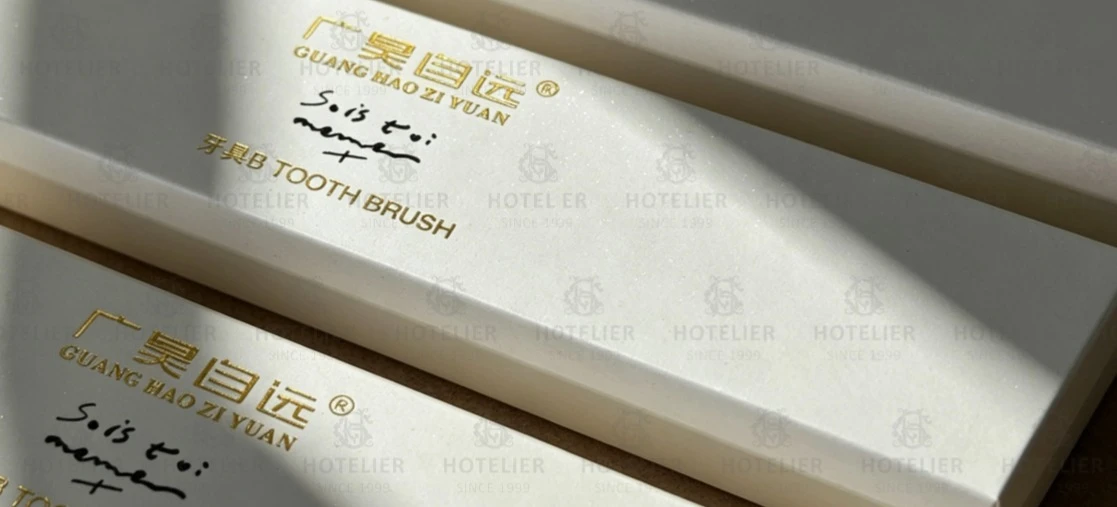
Hot Stamping Gold/Silver LOGO: Metallic premium texture, the mainstream choice for 5-star hotels.
Gift Box Packaging: Hard gift box packaging, exclusive for luxury resorts.
Small workshops always cut costs by simplifying production procedures. Their quotations are much lower at first, but massive defective products will appear after delivery, resulting in return orders and emergency restocks, which greatly increase the overall procurement cost.
3. Supplier Selection: Differentiate Direct Manufacturers & Intermediaries
3.1 Core Differences
Genuine manufacturers own independent workshops and full automatic production lines, completing all procedures from raw material inspection to finished product packaging. Intermediaries have no production equipment and outsource all orders to scattered small workshops, leading to uncontrollable delivery time and product quality.
3.2 Six Verification Standards for Supplier Screening
Production Capacity: Equipped with full-automatic production lines for slippers and toiletries.
International Compliance Certificates: Complete qualifications for smooth cross-border customs clearance.
Customization & MOQ: Clear MOQ for regular and customized products, definite LOGO plate charge rules.
Sample Policy: Clear sample fee standard, and sample fee can be deducted from the first bulk order.
Delivery Terms: Clarify production cycle, sea/land transportation time and compensation rules for delayed delivery.
Client Cases: Able to provide authentic cooperative hotel cases for reference.
Long-term stable procurement relies on standardized factory management. Professional manufacturers conduct strict inspection in every link, reserve inventory in peak seasons and effectively avoid stock shortage risks. Before signing contracts, confirm customized size, packaging color, bottle volume, LOGO specification, container loading plan and overseas warehousing service for large cross-border orders.
4. Inventory & Daily Management to Reduce Consumption Loss
Reasonable Placement: Reduce amenities when occupancy rate is low; prepare spare supplies for peak seasons to avoid waste.
Warehouse Management: Store finished goods in cool, dry and ventilated warehouses. Follow the first-in, first-out rule and classify products for quick picking.
Seasonal Procurement: Place orders 30-45 days in advance before tourist peak seasons to lock production capacity and avoid price hikes and delayed delivery. Place small orders in off-seasons to reduce inventory pressure.
5. Core Procurement Summary
Disposable bathroom amenities reflect hotel service details and directly affect guest experience and online ratings. Many hotel operators regard these supplies as low-cost consumables and overcut budgets, ignoring hidden losses caused by complaints, returns and rush orders.

Four Core Procurement Principles
Select matched raw materials according to hotel star rating, and reject overly low-price products blindly.
Check sealing, filling and packaging details to assess the supplier's real production capacity.
Prioritize qualified direct manufacturers to guarantee stable delivery for cross-border orders.
Set standardized rules for warehouse management and room placement to cut unnecessary waste.
Well-made and compliant amenities upgrade service quality, improve guest satisfaction and repeat booking rate, and finally boost overall hotel revenue. For one-stop customized solutions of slippers and toiletries, please contact professional manufacturer HOTELIER for exclusive quotation and factory inspection reservation.